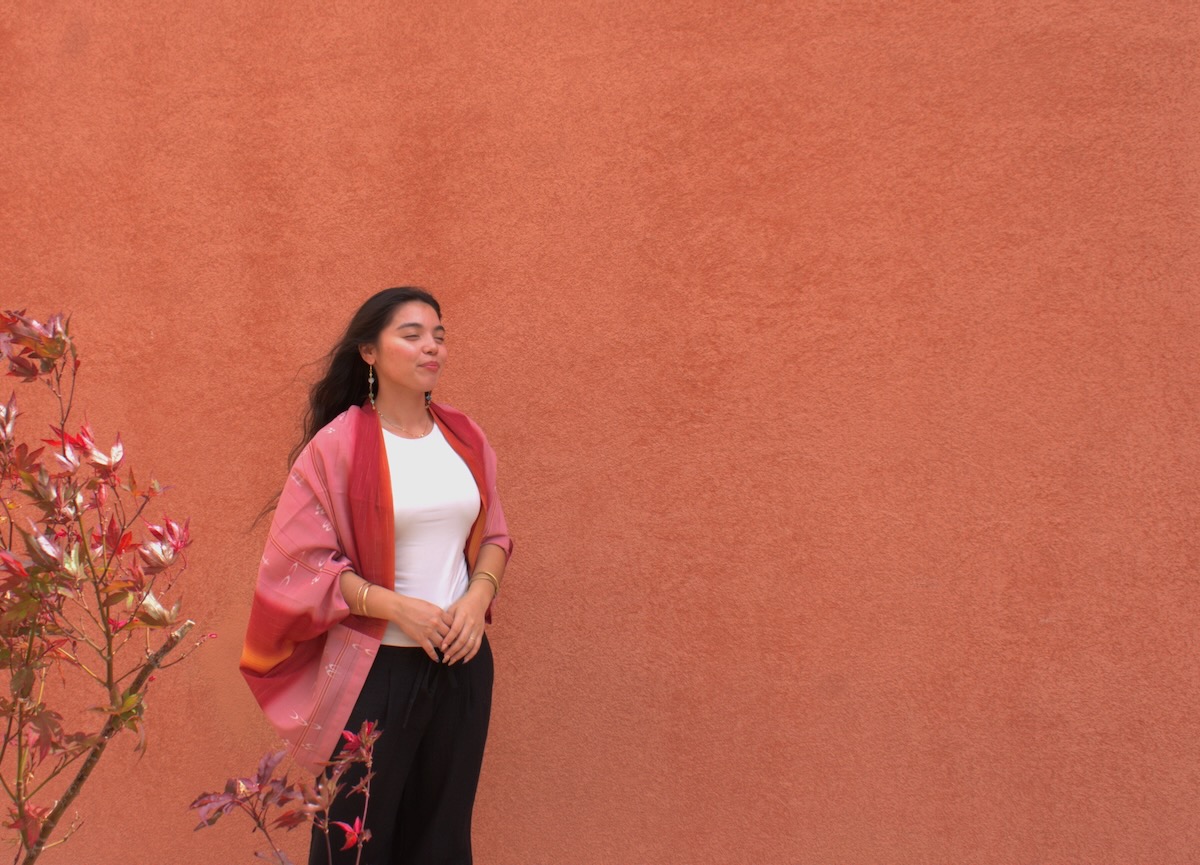
An interview with multi-media storyteller Kaiya Laguardia-Yonamine about connecting local stories from Okinawa to Hawaii to Ghana. Above: Kaiya Laguardia-Yonamine at the 2025 Indigenous Media Conference in Shiewhiback (Isleta Pueblo). Credit: tylee nez.
“Real-life experiences are so much more impactful than statistics. Using storytelling, we are passing on our knowledge in the way that our communities have done for generations,” says Kaiya Laguardia-Yonamine, a Uchinānchu (Indigenous Okinawan) and Afro-Cuban storyteller.
Born and raised in Portland, Oregon, Kaiya recently graduated from the Multimedia Storytelling Master’s program at the University of Oregon School of Journalism and Communication, where she utilizes community-centered stories to bridge across cultures and oceans from Okinawa to Hawaii to Ghana and beyond.
A second-generation Uchinānchu, Kaiya spent her high school summer breaks reconnecting with family in Okinawa, which lies in the Pacific Ocean near China and Japan.
Okinawa was colonized by Japan in 1876. In 1954, following the Battle of Okinawa and the end of WWII, the U.S. empire took control of Okinawa and the rest of the Ryukyu Islands and occupied them until they were placed under Japan’s control in 1972. It remains a Japanese prefecture today. Similar to the U.S. illegal occupation of Kingdom of Hawaii, Japan is illegally occupying the Ryukyu Kingdom, also known to the Uchinānchu people as Loochoo.
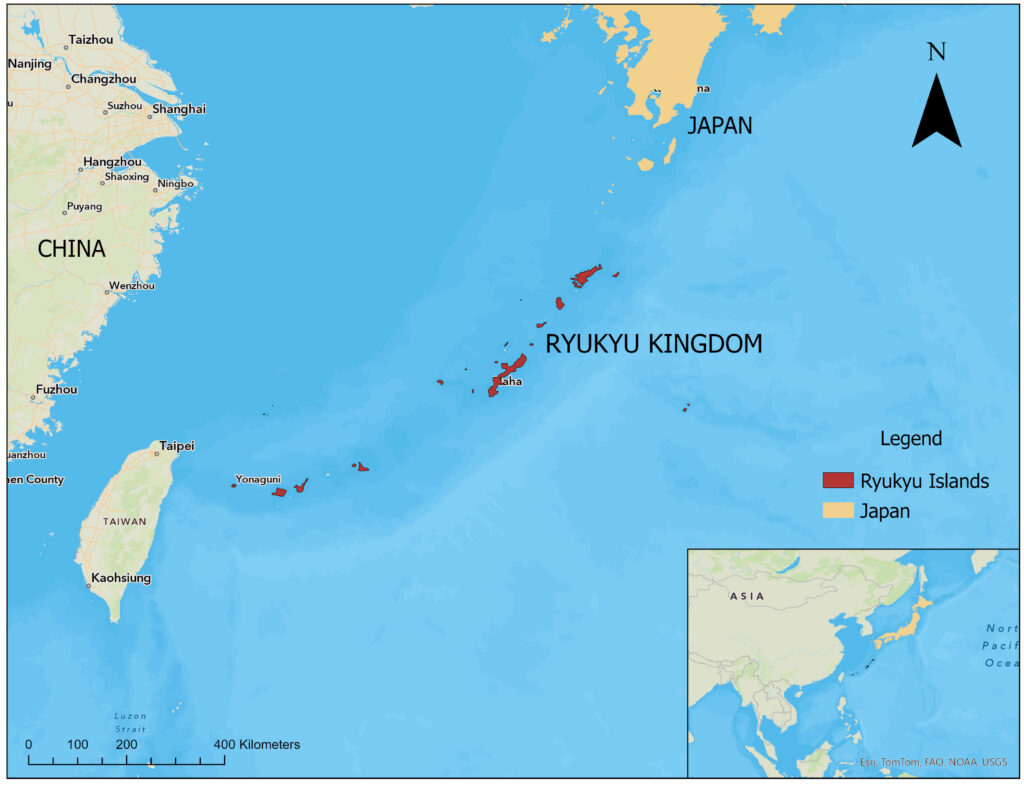
Because of its strategic location, the U.S. still maintains 32 military bases on the small island, making a significant presence in the land, culture, and society. Okinawa holds over 75% of U.S. military bases in Japan but makes up 0.6% of Japan’s area.
There is a long history of large U.S. military installations within Indigenous communities across Turtle Island (Continental U.S.). Examples include Fort Apache (located on White Mountain Apache lands), Fort Defiance (Navajo), the U.S. border wall (Tohono O’odham), Fort McDermitt (Fort McDermitt Paiute and Shoshone Tribe), Fort Ruby (Western Shoshone), Fort Churchill (Pyramid Lake Paiute), Fort Mojave (Mojave) and Fort McDowell (Yavapai).
These examples focus on southwestern Indigenous communities, but this trend continues across Turtle Island. Whether for the purpose of ‘westward expansion,’ national security, or other military strategies, these military installations ultimately displace Indigenous communities and destroy essential lifeways.
In Okinawa, a group of Uchinānchu elders began to stand up and protest the construction of a new military base – and witnessing their experiences sparked a passion in Kaiya for supporting their efforts in a uniquely powerful way: through the lens of her camera.
In Kaiya’s work, she uses film and story as a way to connect with communities across cultures and languages, creating bridges of support and care. Recently, Kaiya spoke with resilience reporter tylee nez about her journey into storytelling, where she finds inspiration, the steps she takes to make the people she interviews feel both safe and seen, and the power of stories to connect Indigenous peoples from around the world.
This conversation has been edited for clarity and conciseness.
tylee: What inspired you to become a storyteller?
Kaiya: So, I am mix—my mom immigrated here, and my dad’s side is Afro-Cuban so very layered histories on both sides. Oral history and storytelling are a very integral part of my cultural practices for passing history through elders with songs and dance. Storytelling as a practice has existed around me as long as I can remember.
I really wanted to contribute to storytelling for my people and help pass along stories from our elders. When it comes to storytelling work, I like to focus on Indigenous communities, especially Indigenous island peoples, like our solidarity across our different layered and shared histories. A lot of my passions are around youth organizing, climate justice work, Indigenous feminism, and critical race theory. I love storytelling in different mediums, like audio-visual pieces. Recently, I have been working with audio reporting, but my love, heart, and soul are documentaries right now.
In college, I went to University of Hawai’i Mānoa in O’ahu where I did a lot of storytelling for Native Hawaiian and Uchinānchu communities, mostly in the broadcasting world. I got my footing into how stories can impact how our community is seen and represented from within ourselves, transiting the lens of struggles into the lens of resilience, beauty, and how we uplift each other.
tylee: What drew you into journalism and climate reporting?
Kaiya: For most of my high school years, I would return home to Okinawa every summer and live with my family. We lived a very rural island country life centered around our traditional practices and close to our elders. A lot of our stories are very close to my heart around our ocean, protecting our lands and language. Learning a lot about the social justice movements happening on our islands, particularly around the military crisis, this was the driver for journalism.
For context, Okinawa has 32 U.S. military bases across our islands. Our islands are super tiny. The bases consume a very large portion of our islands. As Uchinānchu, our kingdom is Ryukyu Kingdom. Similar to Hawaii and U.S. Empire relationship and history, for us we are colonized by Japan, we are considered a state of Japan with the U.S. empire occupying a significant amount of land because of their alliance. We do not claim Japan. I do not consider myself Japanese, I am Uchinānchu.
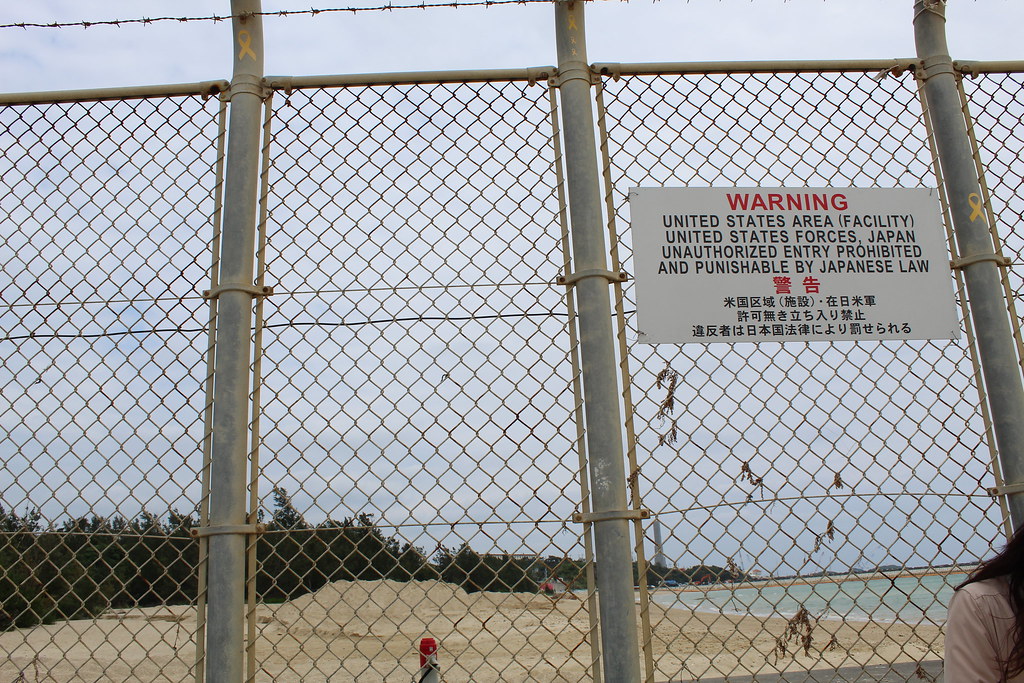
So, all that to say colonial role is really affecting our lands and our ocean. On one of my visits back home, a new military base was constructed and over the summer I saw the construction. A huge concrete base on top of our coral reef systems, destroying everything underneath the slab. It was very hard to process.
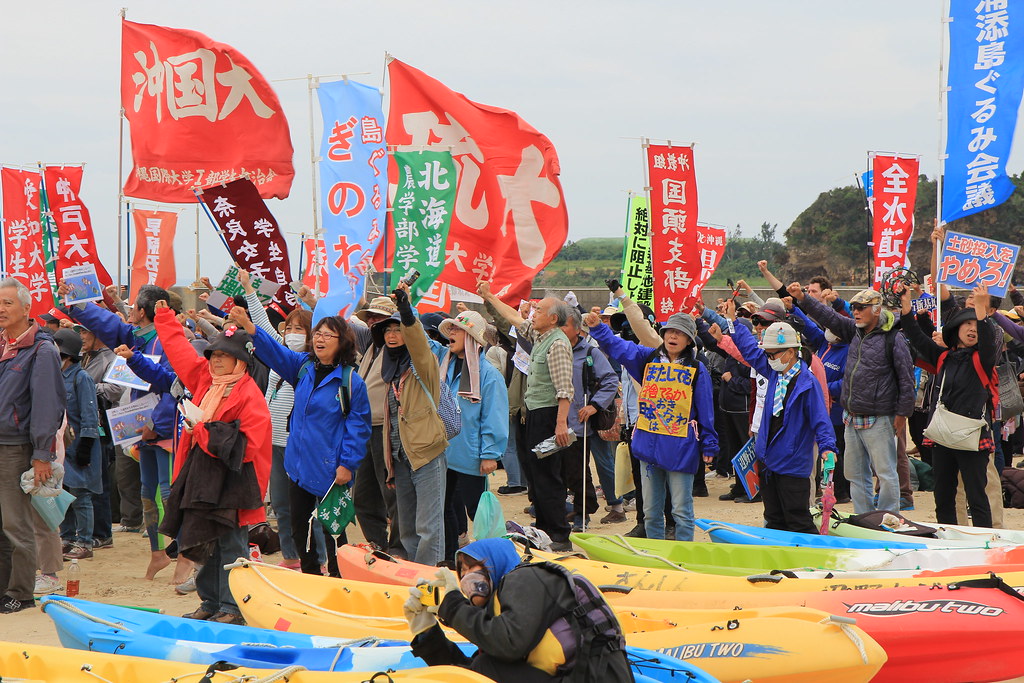
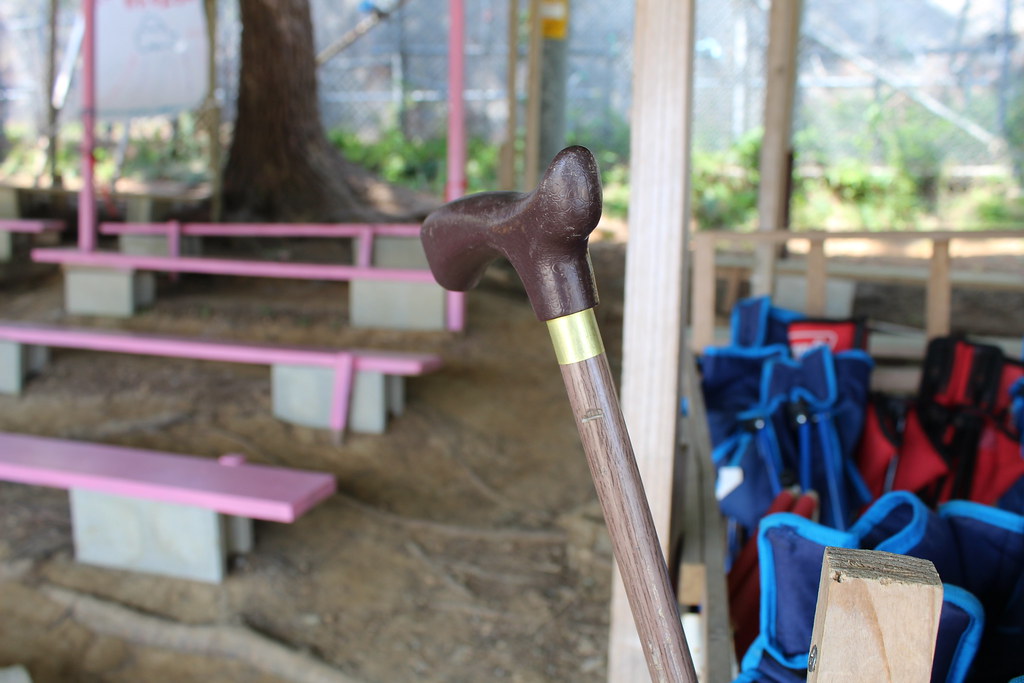
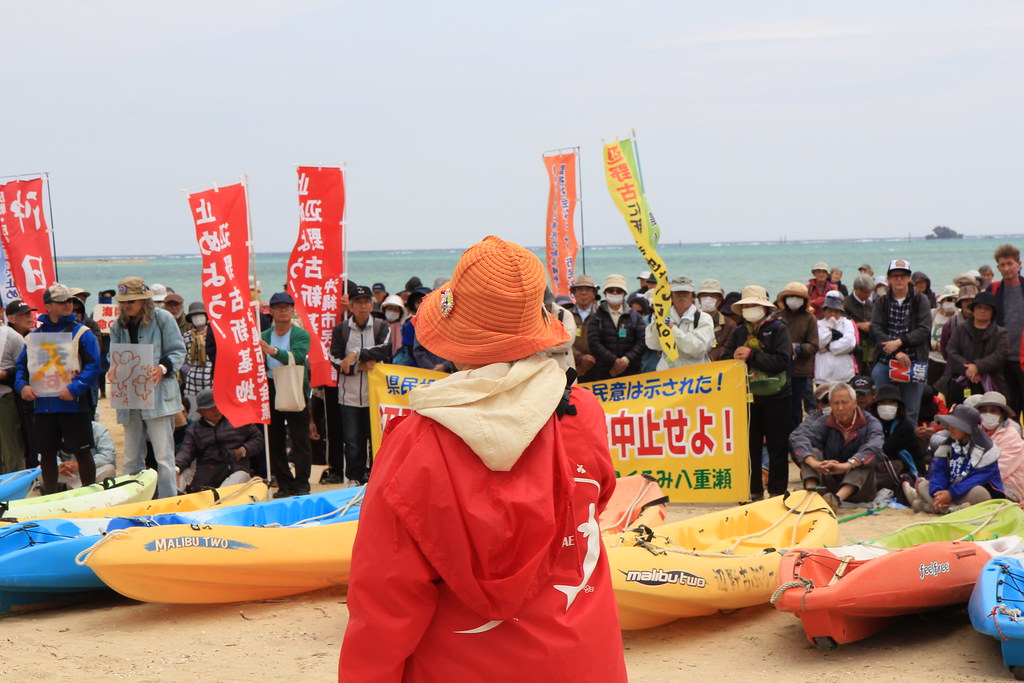
While I was there, my aunties said “Hey, you guys need to go see what is happening at these protests because the elders are there every day.” Our elders, who are in their 80s, 90s and even 100s with their canes and walkers, were laying on the ground to stop hundreds of bulldozers from entering the base. The bulldozers were filled with dirt, extracted from the mountains, and dumped into the ocean to fill.
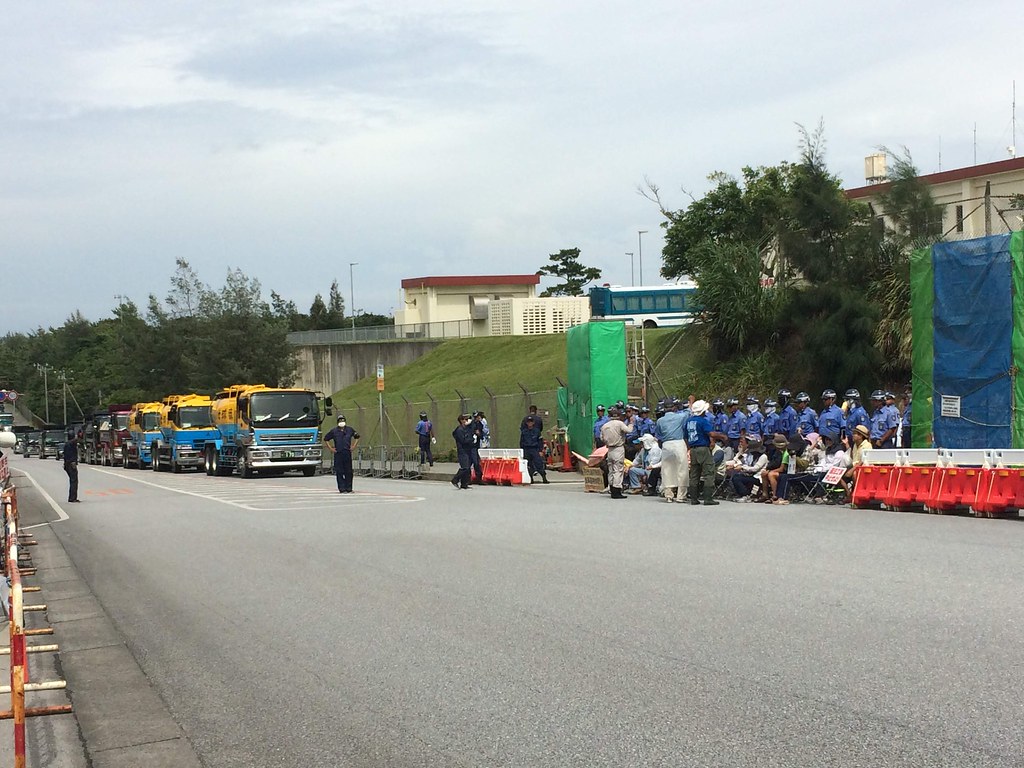
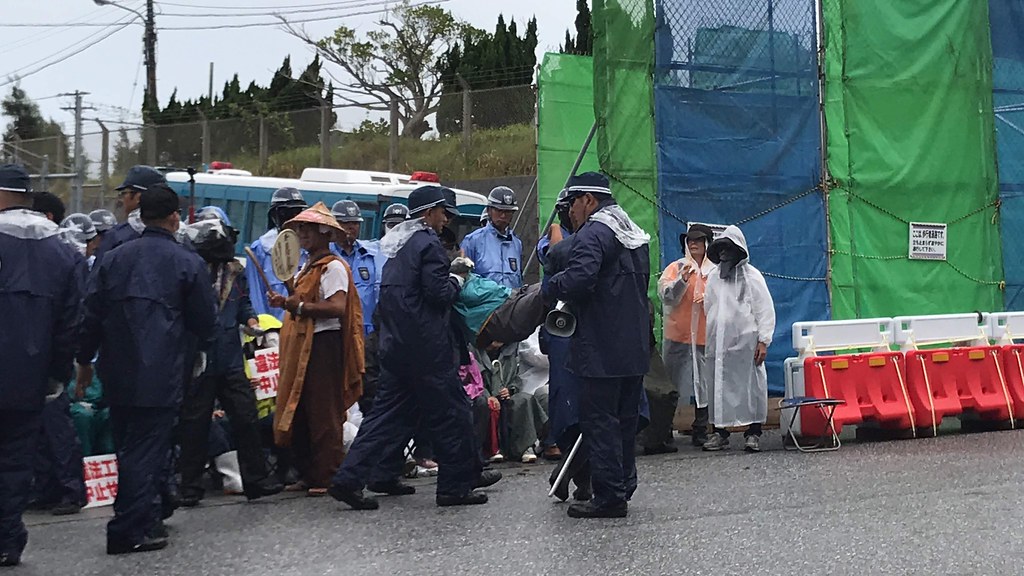
Okinawa practices are based on fishing; we are ocean people. Our lives were threatened. All these elders are war survivors from the Battle of Okinawa, a huge generational trauma for our people. It was heartbreaking to see so many people putting their bodies on the line to stop the destruction of not just their land but their ocean—our identity.
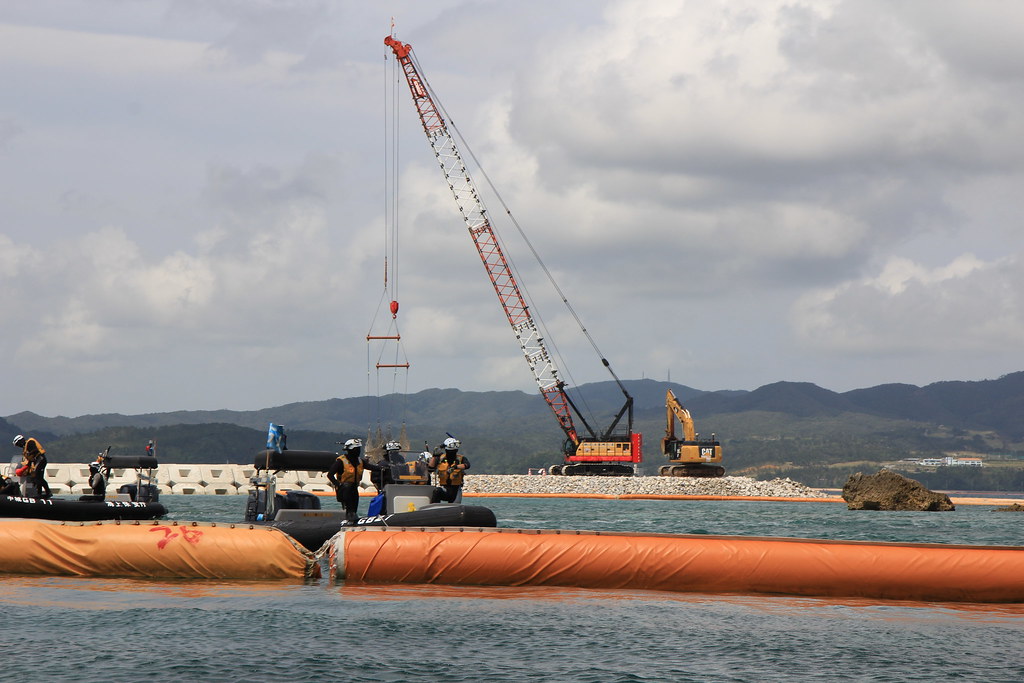
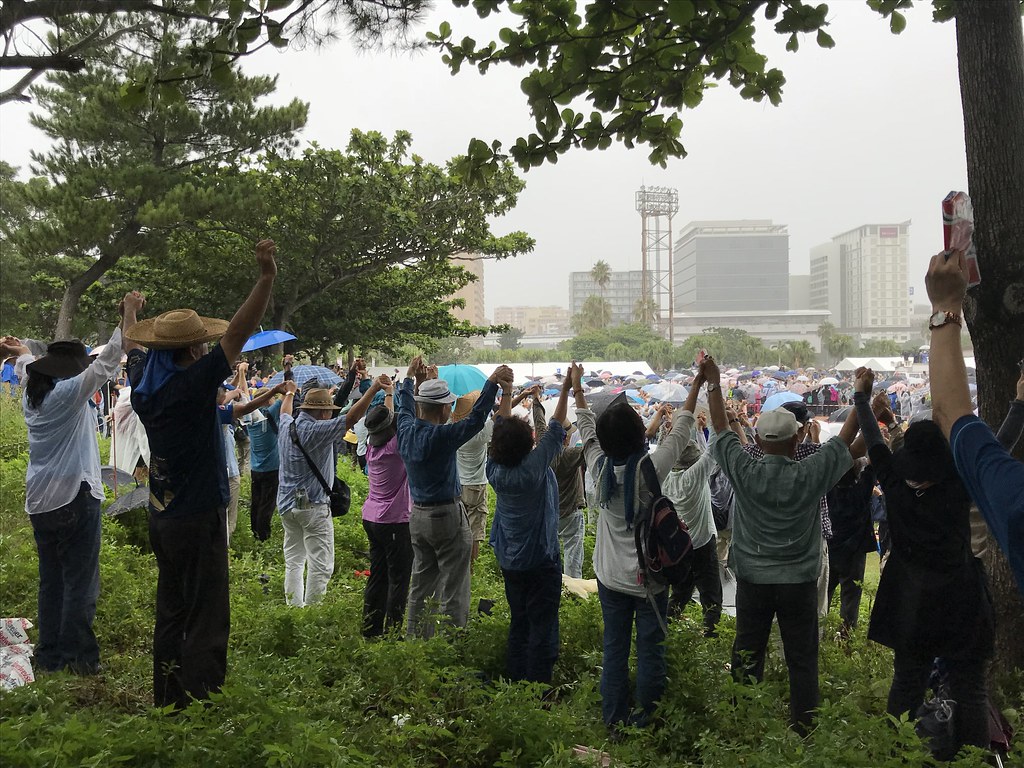
To top it off, I felt even worse to witness and be part of a monumental moment, just to return to Oregon for my school year and act like nothing happened. However, I raised money with friends and family to return to Okinawa to create a very amateur short documentary, Our Island’s Treasure, with my elders. That school year during spring break, I interviewed elders asking what they want the world to know, what they want students in the U.S. to know, and how we can support my indigenous elders in their fight.
I wanted to make a platform for my elders, war survivors, and activists on the frontlines because they are not granted space. Mainstream media was through lenses of U.S. military or Japanese national news, and none of it was our local people telling their stories.
tylee: Wow, that is absolutely devastating and heartbreaking to hear, all that happening to a beautiful island and community. I can see how this lit the fire for storytelling.
Kaiya: Yeah, once you see that for other communities, it hits. But once you see it for your own elders, your family, then how could I not take part in it somehow? You know, how can I not do something about it?
Again, climate justice work and all the Indigenous storytelling efforts are connected. And to see your own history playing out in front of me was another worldly experience. I began asking myself, how do I help my aunties and uncles, and how do I tell the world what they are going through right now? So that is how I started journalism through a documentary for my family and my home.
tylee: For sure, that is a surreal moment! This is such a powerful story, why do you think stories are powerful tools for communicating around climate change or climate justice?
Kaiya: I see storytelling as a vessel for people to empathize more and understand the context of such movements, to see what these activists are experiencing, and what they’re fighting for their families.
Storytelling makes it so much more real to people because it feels so much, it brings more action, it brings more impact, and more empathy. I think it is a beautiful way for people to connect if they don’t have ancestral relations with that land. This still finds that connection.
tylee: I watched the documentary you made, and I was moved to learn more and actually do something. Like you said, I felt it.
Kaiya: Thank you so much, I’m glad you watched it. Yeah, it applies to that documentary, but for me it, it applies to any indigenous storytelling. For example, my ancestors are not from Turtle Island, but I hear these stories and can feel it, experience it with them, even as somebody who is indigenous to a different community.
It hits so much when you can feel that story versus seeing it or reading it. Where you enter the emotional process of understanding or trying to understand a different experience and be motivated to do something, to help. It’s a deeper level.
tylee: Can you share an example of a climate story you’ve reported on that was especially powerful? What made this story meaningful?
Kaiya: Yeah, I can give a few. Definitely, the first documentary experience was a hard-hitting as for someone who was directly related to the people on the frontlines and a lot of my respected elders—my first time reporting on my own cultural community.
Oh, while I was in Hawaii, I did a lot of storytelling on different climate efforts. I did legislative reporting on a policy about cleaning on of the Pōka’i Bay on the west side of Oahu. This area is considered the most highly concentrated area for Native Hawaiians on the island. I highlighted the community voices advocating to clean that Bay through storytelling. The bay was a place for gatherings. A friend of mine was born and raised in that Bay; she recalls growing up in pristine water, but it is far from that. Legislative reporting includes jargon, but to bring this to life for somebody, like it is not just a piece of paper. Bringing that breath of life into the context for something that seems simple to outsiders, it is so much more layered and valuable for Indigenous people.
Over the summer, I was in Ghana solely focusing on Indigenous storytelling and climate storytelling. I was able to make five features in five weeks. I was out running around as a camera operator for a lot of different reporters highlighting climate solutions journalism.
One of the stories was about the intense amount of pollution in concentrated areas of Ghana like the amount on the side of the road. For context, deforestation is happening in the outer regions for more land. This auntie uses plastic waste on the side of the road to create lumber by melting it down. Thus, there is less demand to chop down trees while removing the plastic from the ground.
I couldn’t have thought of a more creative solution. If I hadn’t met this auntie, learned her story, learned why she chooses to do that, and why she thinks it’s important for the community.
Storytelling in climate work brings such a more critical lens to the work; it can bridge experience for people.
Like I connected with this person I have never met before, in a place I have never been, but our shared understanding of protecting the land—her ancestral village and future generations—I was connected. Reflecting upon those experiences, it was the people that brought value to the story.
tylee: Yeah, I love the connection across these stories, that the people of the community drive the story and create a ripple of action. How do you think storytelling can best support climate adaptation?
Kaiya: I feel like stories and understanding a person, in addition to their experience and how it relates to their issue, brings so much more life. I was part of this amazing climate justice group called the Pacific Climate Warrior for Oceania people who are on the front lines of climate change, and they were using storytelling. One of their values focuses on the 1.5 movement, trying to keep the global temperatures down to 1.5 degrees Celsius because if it increases, a lot of these islands are going to be lost from the map due to sea level rise.
Instead of focusing on this number, they are giving it life by telling the community members stories. To say, care about this because these families are losing their language, losing traditional practices—essentially their lifeways. This is a very impactful way for people to relate to that story, and it’s much deeper than research or data for our people. Sometimes–a lot of times–our histories are written with statistics and not with the faces of the local people. Real life experiences are so much more impactful than statistics. Using storytelling, we are passing our knowledge in the way that our communities have done for generations.
It is empowering for me to see people, especially Indigenous people in this space using the methods that our ancestors used to pass knowledge.
tylee: When you are in these communities, how do you approach telling their stories, what measure do you follow to ensure consensual filming and recording?
Kaiya: To me, the process is more important than the outcome. I’m really invested in community centered storytelling. While working with different communities, my priority is to make sure they feel safe and seen and not put the story over their well-being.
Working with my own community, I was working with elders about passing their stories in a way that they felt empowered and loved. In that way, I would do a transparency meeting about the intentions of this project and their level of comfortability. For filming, talking to a lens can be very intimidating and more so, when it’s about generational trauma or recalling an experience, they have never spoken about. I verbalize when I am recording, if there need to be any cuts, or for a break because we are discussing a hard topic. It is very important to be clear on what is yes and what is no, and to avoid parachute/extractive journalism.
I do as much prep; I can do ahead of time because I want this process to be as collaborative as it can. I feel like I am a platform or vessel for telling that story but while prioritizing their autonomy over the uses of their visuals and how the community is illustrated. Basically, I want as little emotional labor to be put on the storyteller themselves.
It’s an absolute privilege to listen to these stories and they have experienced so much already. I want to really focus on their voices more than the story.
tylee: So, you started storytelling very early on. What made you feel ready or prepared to hold such a role in your community?
Kaiya: I was in a unique position because I lived in the U.S. and I could speak both English and Japanese, and conversationally our Indigenous language. There are not many people who could bridge those understandings.
For example, the U.S. military men on the base had no idea what my elders were saying so I was trying to cross that barrier for language and build that cultural context. This was important to have full scope and understanding through a decolonial lens.
Although, I was very unprepared to do a documentary because before then I had never touched a camera. With the help of my high school teachers. I got some basic one-on-one training.
Feeling unprepared and scared, I knew it was not about me; it was about the movement – I was contributing to something bigger than myself. I reminded myself that my elders got me; the activists and organizers did too.
tylee: So, what advice do you have for young people who are interested in pursuing journalism, storytelling or multimedia storytelling?
Kaiya: It can feel really discouraging to be in media/journalism spaces, coming from underrepresented communities because of the top people running the show or the system. The mainstream narratives shared are from outsiders.
But to always remember the unique position and privilege and honor that we, as people from our communities, can tell our stories in the most righteous way. That alone is an amazing role to have. And ultimately, if not us, then who? Who is telling your story? It is important to craft the lenses of perception for your community. For me, I was tired of hearing the same dominant narrative of Okinawan people wanting tourism or the base. The base was placed in the poorest region of our islands to bait the community for jobs; this brought a lot of layers from our war survivors and young adults needing a job for money.
Another piece of advice, know why you are there, why you are pursuing this because it can be easy to burn out. There is a lot of chaos, a lot of confusion, and emotions for people. For me when I am feeling that I ground myself on the reasons I am doing this, my aspiration, and my contribution to my community. I’ll credit this to my aunties in Okinawa that “Yes, the reason we do this work is because we are angry about it and we need to continue our livelihood. We [aunties] are protecting something we love; this keeps you in the movement.” For me, I am here because I love our stories. I love our oceans. I want to help protect that and fight from a place of love.
All to say, know your why and know that you are not alone on that journey. Your communities’ stories deserve to be heard from the community themselves and not misrepresented or inaccurate in any way. Lastly, if you have the time and inspiration, go for it!
More information
For more information about Kaiya Laguardia-Yonamine and her work, please visit: https://kaiyaly.myportfolio.com/