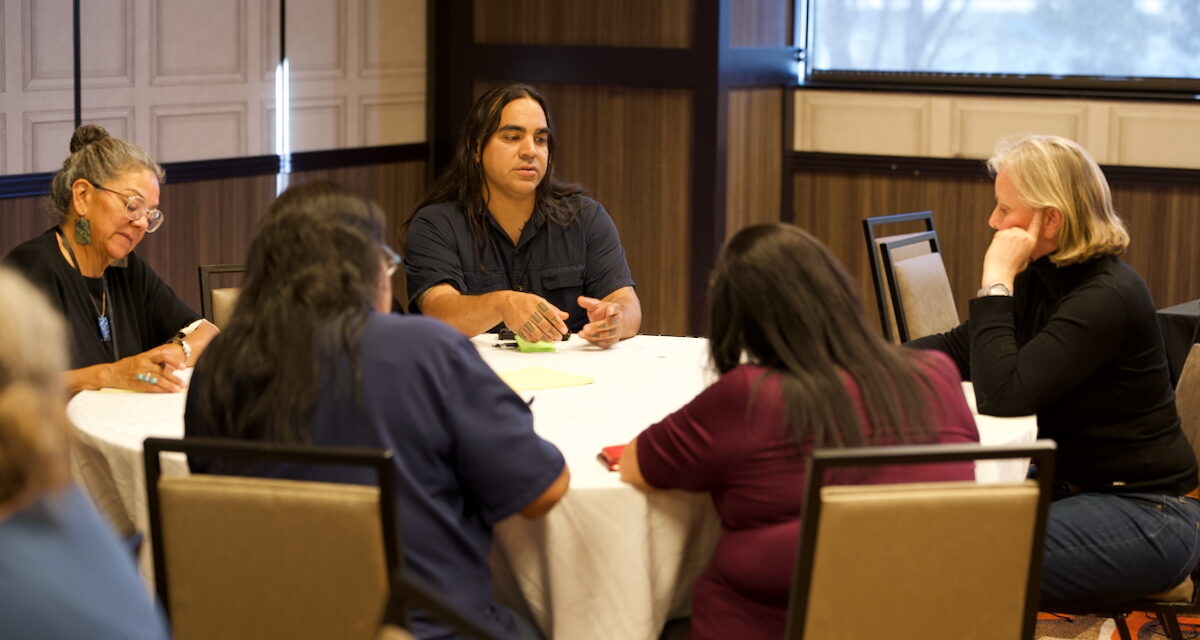
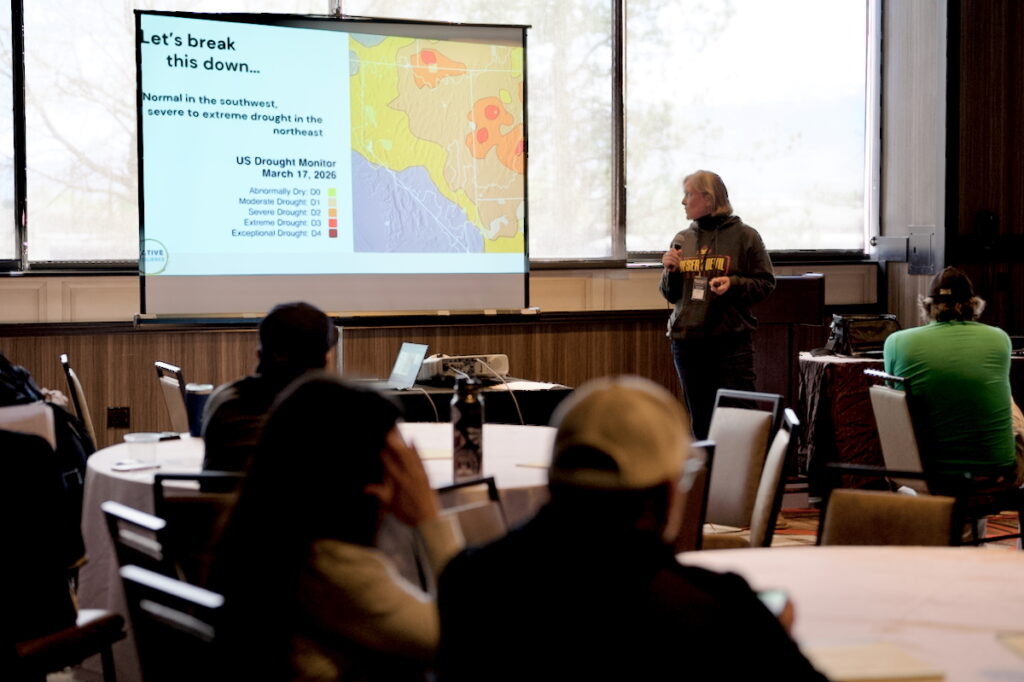
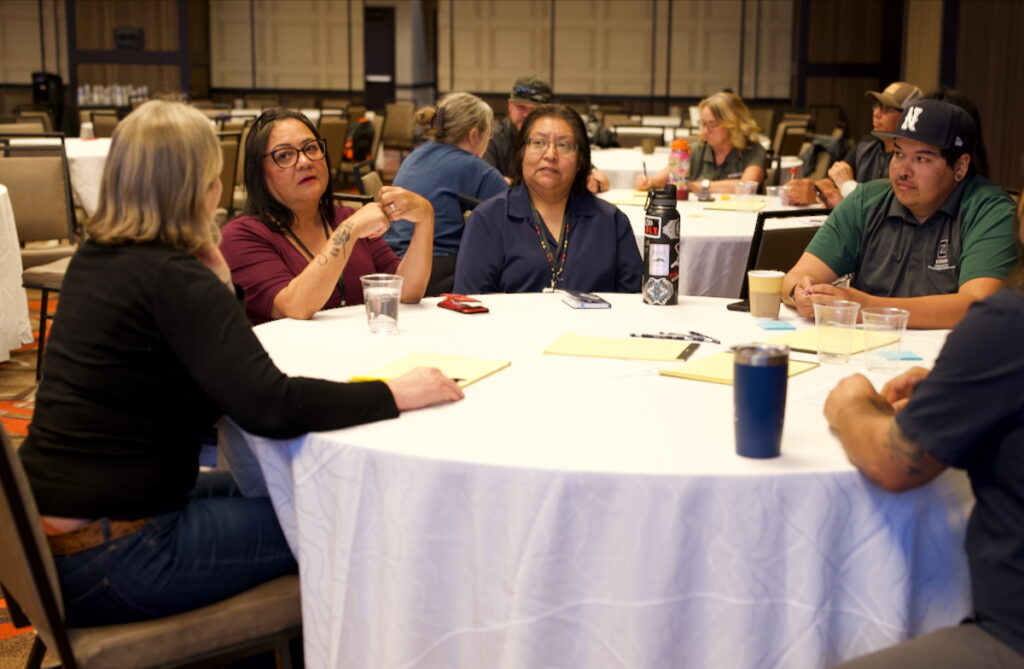
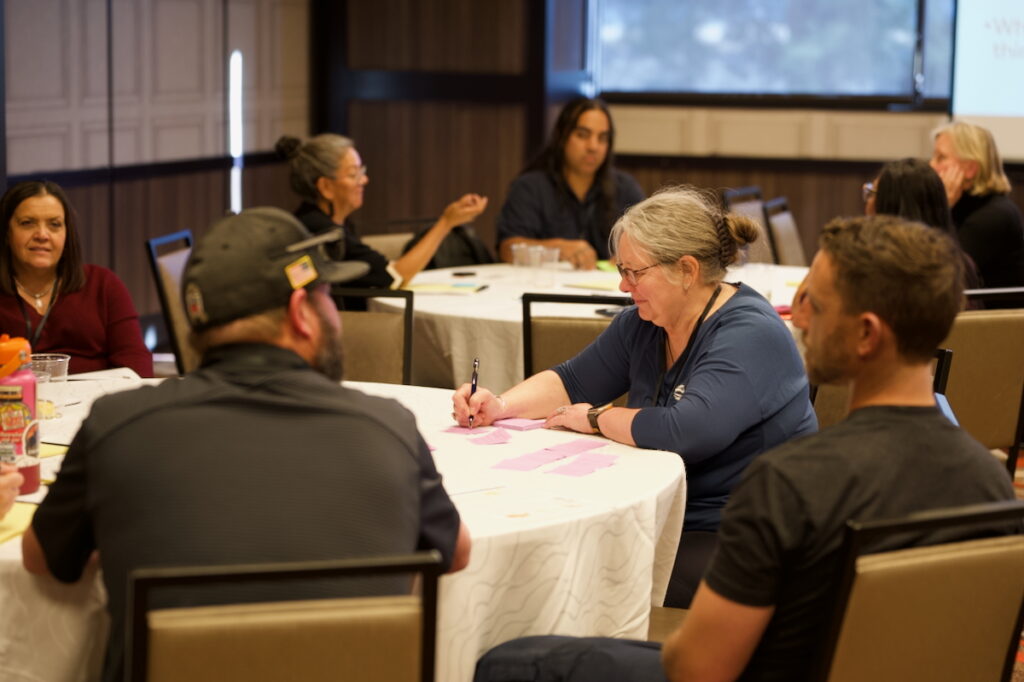
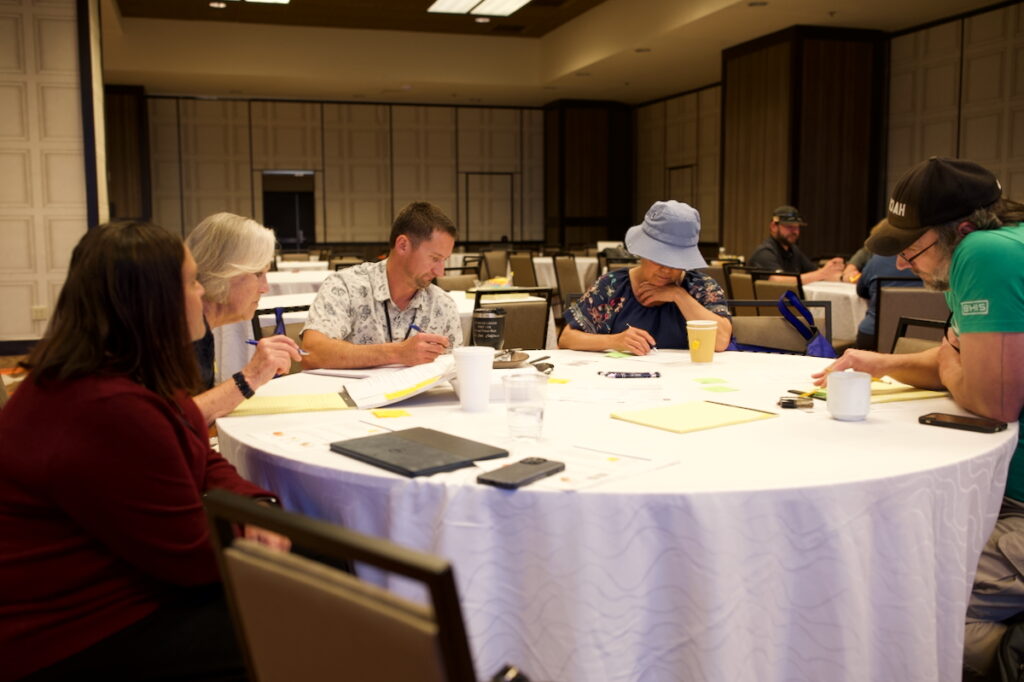
Above: In a session at the Roots-2-Results Tribal Food and Agriculture Summit in Sparks, Nev., workshop participants discuss drought impacts in their regions. Credit: Kelsey Fitzgerald/Native Resilience.
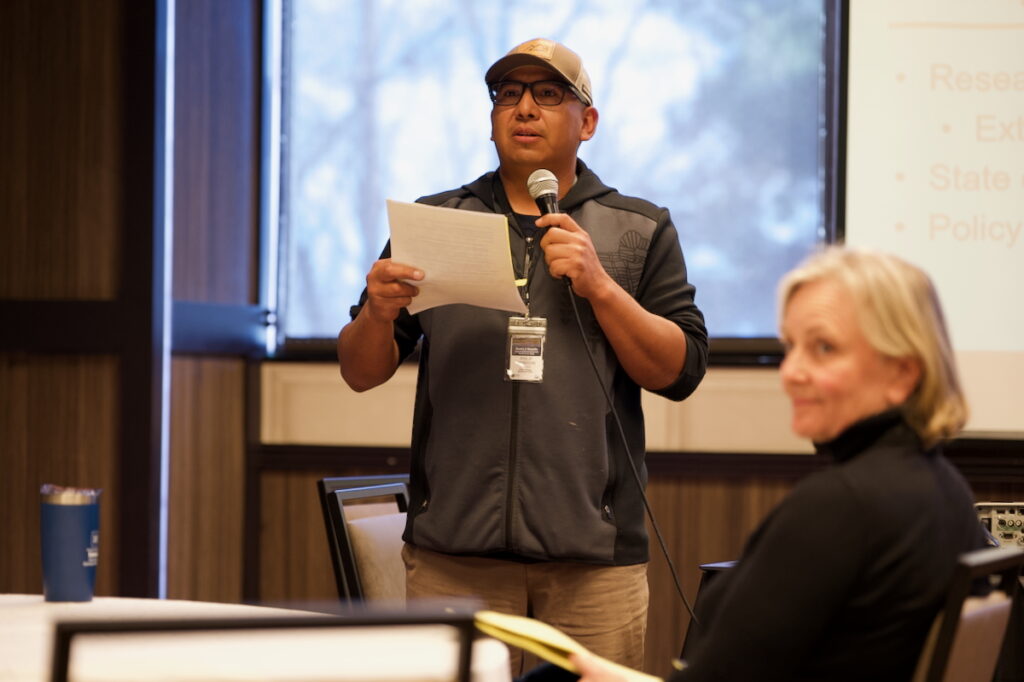
After Nevada’s warmest winter on record, drought and temperature change are on the mind of many in the state’s Tribal food and agriculture community. At the recent Roots-2-Results Tribal Food and Agriculture Summit, held March 24-27th in Sparks, Nevada, members of the Native Resilience team led a facilitated discussion to connect drought data with what drought is looking like on the ground for farmers and their communities.
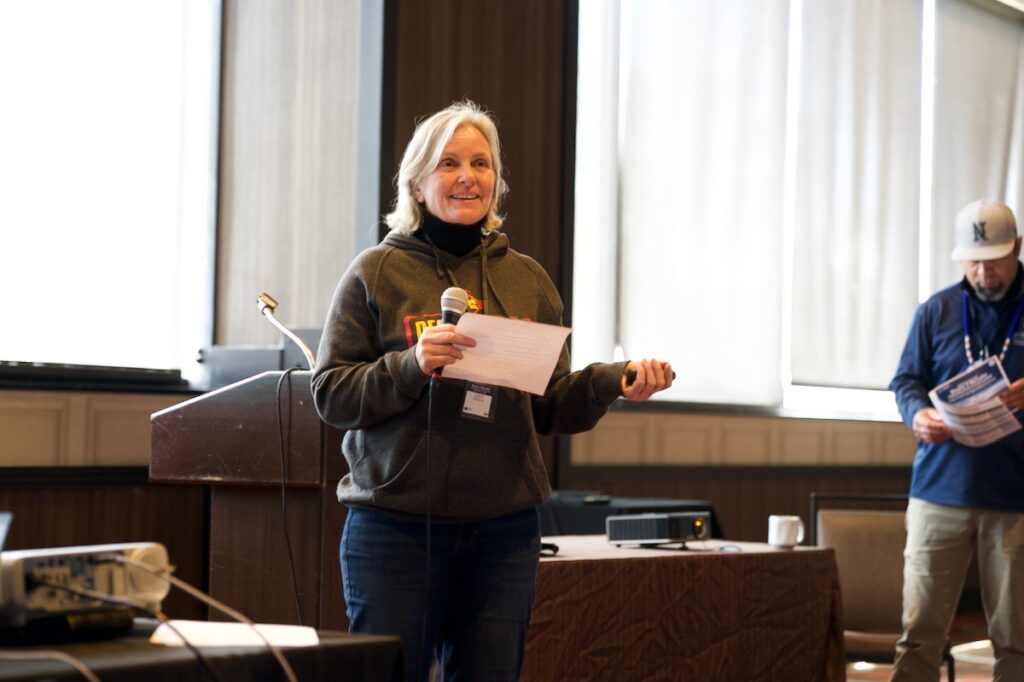
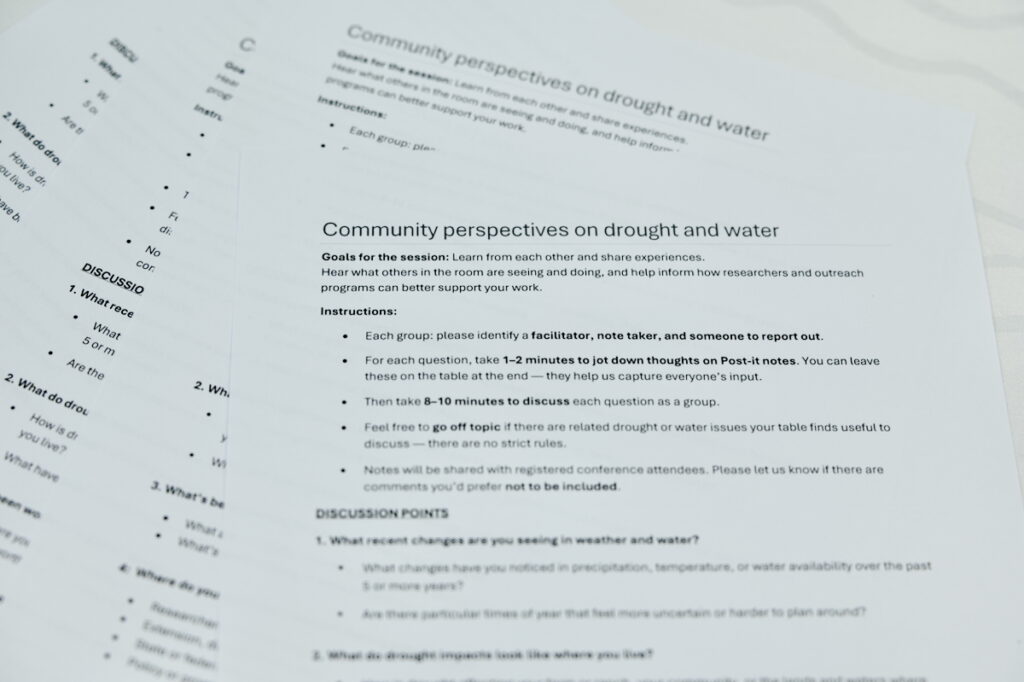
The discussion, led by Caitriana Steele (New Mexico State University/Native Resilience/RAWCS) and Maureen McCarthy (Desert Research Institute/Native Resilience), asked participants to reflect on recent changes they have experienced in weather and water, and what drought impacts they are seeing where they live. Participants were then asked to share what is working well when dealing with drought, and to discuss areas where additional support is needed.
Participants mentioned experiencing a wide variety of drought and climate impacts, including heat extremes, precipitation extremes, wildfire smoke effects on livestock, algae blooms, allergies, changes in watering needs, river degradation, increased weed growth and more. Some reported that their communities are doing a good job of sharing climate and weather information via social media and extension offices. Participants also described adaptations such as experimenting with raising drought-hardy cattle from Australia and engaging in regenerative forms of agriculture that work more holistically with nature.
PHOTOS
Drought and Climate Resources
Presentation: Snow Drought Outlook and Early Action Resources with Dr. Kyle Bocinsky. The Native Resilience 2026 Webinar Series kicked off with a presentation by Dr. Kyle Bocinsky on preparing for snow drought and water stress in Tribal agriculture. Dr. Bocinsky shared the latest snow drought outlook and snowpack status updates for key hydrologic basins across the western United States. As Director of Climate Extension for the Montana Climate Office, Dr. Bocinsky brings deep expertise in climate science and its applications for Tribal and agricultural resilience. This session was presented to the Native Resilience Working Group on February 17, 2026.
National Integrated Drought Information System – https://www.drought.gov
NRCS Snowpack and Water Supply Data – https://www.nrcs.usda.gov/programs-initiatives/sswsf-snow-survey-and-water-supply-forecasting-program/snowpack-and
NRCS SNOTEL Stations – https://tinyurl.com/NRCS-snotelmap
Great Basin Weather and Climate Dashboard – https://gbdash.dri.edu/
US Drought Monitor – https://droughtmonitor.unl.edu/
National Weather Service Climate Prediction Center Outlooks – https://www.cpc.ncep.noaa.gov/